The Understaffed OSC Problem in Home Building | Jome
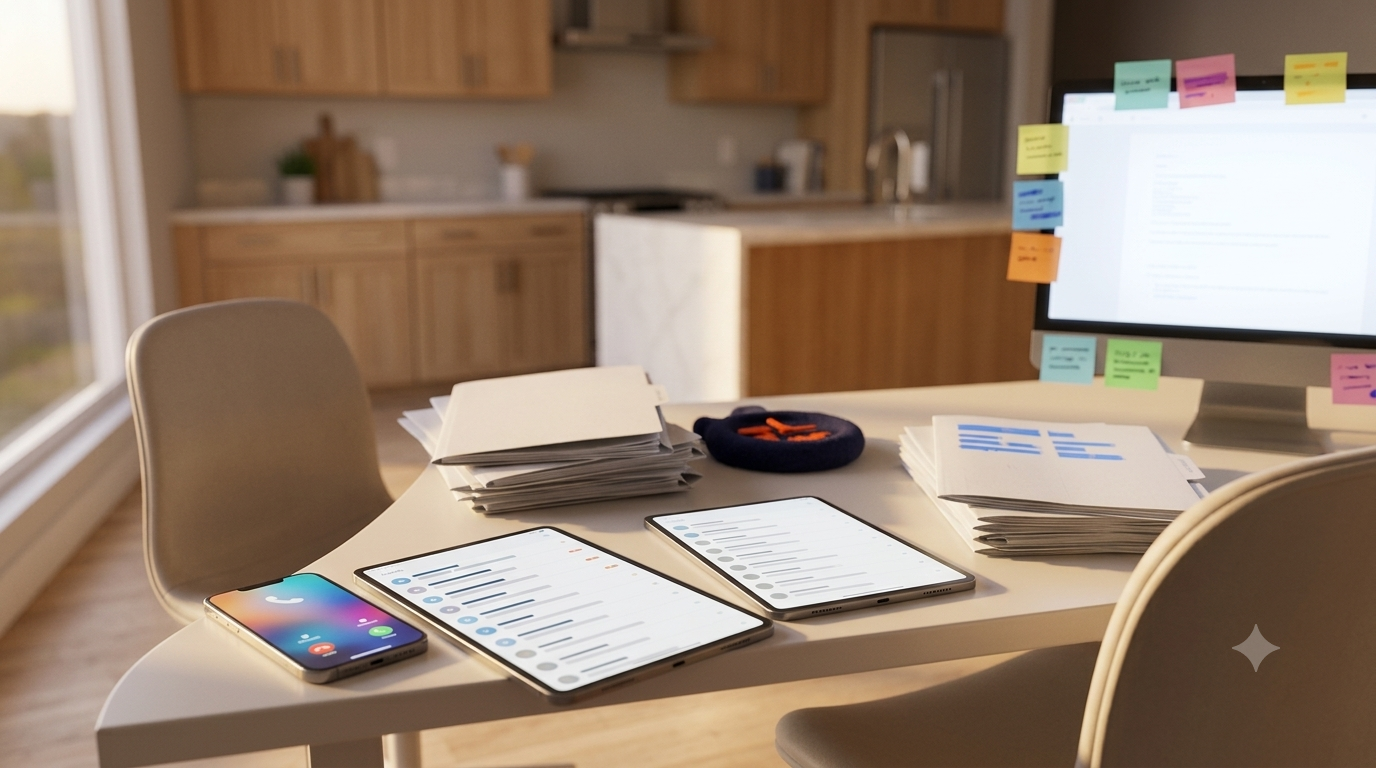
Walk into almost any home builder’s sales operation and you’ll find the same staffing model: one online sales counselor per community, sometimes one OSC covering two or three communities, expected to greet walk-ins, run model tours, answer the phone, work the new leads, chase the aged ones, coordinate with the lender, update the CRM, and somehow hit this month’s number.
It’s not that builders don’t value the OSC. It’s that the OSC role quietly absorbed three jobs over the last decade — inbound concierge, outbound prospector, and CRM administrator — without the headcount expanding to match. The result is a sales team that’s structurally understaffed and doesn’t show up that way on the org chart, because the boxes are all filled. The problem isn’t empty seats. It’s that the seats that are filled hold one human each, and the work needs more.
The math nobody runs
Here’s the calculation most builders never put on paper. Take a community OSC who’s been in the role for a year. Between active inquiries and the CRM backlog, they’re realistically responsible for somewhere between 2,000 and 4,000 buyer contacts. To work that base at even a modest follow-up cadence — a few touches per contact over its life — you’re looking at many thousands of outbound attempts a year.
A work week has forty hours. Subtract the time the OSC spends with buyers who are physically in the model home (which is the highest-value thing they do and the thing you’d never want to automate away), subtract meetings, subtract the lender coordination and the CRM hygiene, and the hours left for proactive outreach are a fraction of what the contact base demands.
The math has never balanced. Builders have just learned to live with the imbalance by quietly accepting that most of the database goes unworked — and then buying more new leads at higher cost-per-lead to keep the top of the funnel full. We laid out the operational version of this in our OSC Capacity Playbook; this post is about the structural reason the playbook is necessary in the first place.
Why “just hire another OSC” rarely happens
The obvious fix is more people. In practice, it almost never gets approved, for reasons that are entirely rational from a finance seat:
The ROI is hard to pre-prove. A new OSC is a fixed cost starting day one, while the pipeline they’ll generate is uncertain and lagged. A VP of Sales asking for a second rep per community is asking finance to bet on an outcome that won’t show up for two quarters.
Volume is uneven. Lead flow spikes with new community openings, marketing pushes, and the seasonality that housing-market researchers like John Burns Research and Consulting track closely. Staffing to the peak means paying for idle capacity in the troughs; staffing to the average means drowning during the peaks. Neither is comfortable.
Coverage gaps are expensive to staff for. More than half of inquiries arrive evenings and weekends. To truly cover them with humans you’d need shift coverage that no single additional hire provides — you’d need several, on a rotation, which makes the budget ask even larger.
Great OSCs are hard to find and keep. The role is demanding and the good ones get poached — and industry bodies like the National Association of Home Builders have long flagged sales and construction labor as a persistent constraint. Solving a capacity problem by hiring assumes a labor market that cooperates, and it often doesn’t.
So the hiring req gets denied, the OSC stays underwater, and the database keeps rotting. This is the loop most builder sales orgs are stuck in.
Reframe: it’s a capacity problem, not a headcount problem
The trap is treating “we need more capacity” and “we need more people” as the same sentence. For most of business history they were. They aren’t anymore.
The work crushing your OSC divides cleanly into two piles. One pile is high-judgment, relationship-driven, in-person work: walking a family through a model, reading the room, handling the emotional weight of the biggest purchase of someone’s life, closing. That pile is irreplaceably human, and you want your OSC spending more time there, not less.
The other pile is high-volume, repetitive, time-sensitive grind: the first response to a new inquiry, the third follow-up call, the “are you still in market” text to a six-month-old lead, the after-hours coverage, the relentless cadence work. This pile doesn’t need judgment. It needs to happen reliably, fast, and at a volume no single person can sustain.
You don’t need a second OSC to do the first pile. You need something underneath the OSC to absorb the second pile so the human you already employ can spend their hours where they’re worth the most. (If the “does this mean AI replaces my rep?” question is nagging, we answer it directly in Will AI Replace Your OSC?.)
How builders are adding capacity without adding headcount
This is the model Jome is built around: AI that extends your team rather than replacing it. Jome’s AI handles the high-volume pile — calling and texting new and aged leads, working a real follow-up cadence, covering evenings and weekends, qualifying buyers, and booking the ready ones into the OSC’s calendar. The OSC keeps the high-judgment pile and walks in to a day full of appointments instead of a backlog of unworked contacts.
The reason this clears the budget conversation that hiring couldn’t is that it isn’t a fixed bet on an uncertain rep. It scales with volume — covering the peak without paying for idle troughs — it covers the after-hours window a single hire never could, and it puts the existing, expensive, hard-to-replace OSC where their time actually converts. You’re not adding a seat. You’re giving the seat you have more reach.
This is the same shift other verticals have already made: the understaffed multifamily leasing office, the dealership’s overloaded BDC, the support team drowning in tickets. In every case the winning move wasn’t “replace the humans.” It was “stop asking one human to be a system.” For the broader argument about why builders who wait on this fall behind, see our take on the 2026 AI adoption gap.
What changes when the capacity problem gets solved
Builders that close this gap tend to report the same set of shifts, and they’re worth naming because they’re the actual business case:
The OSC’s calendar fills with appointments instead of admin. The most visible change is that the rep spends their day with buyers, not chasing voicemails.
The database stops rotting. Aged leads that used to die in a “Cold” view get worked automatically, and a steady trickle of dormant buyers re-enters the pipeline. (The seven ways that database leaks pipeline are catalogued in our home builder CRM leaks listicle.)
Lead spend gets more efficient. When you actually work the leads you already paid for, you don’t have to keep buying new ones at the top to compensate. The cost-per-appointment falls even if cost-per-lead doesn’t.
Manager span widens. A sales manager can oversee more communities when the follow-up engine is consistent and visible, because they’re not personally backstopping every rep’s missed cadence.
FAQ
Is the answer just “buy software”? Not exactly. The answer is to separate the work that needs a human from the work that needs a system, and to stop forcing one person to do both. Software is how you cover the second pile — but the reframe comes first.
Won’t automating outreach make the experience feel less personal? The personal moments — the tour, the close, the hard conversations — stay with your OSC, who now has more time for them. The automated layer handles the parts that were already impersonal because they weren’t happening at all. A follow-up that occurs beats a “personal” one that the overloaded rep never got to.
How many communities can one OSC really cover with this model? It depends on volume, but the constraint shifts. Once the follow-up grind and after-hours coverage are off the OSC’s plate, the binding limit becomes how many buyers they can meet in person — a much higher ceiling than how many calls they can physically dial.
What if we genuinely do need to hire? Sometimes you do. The point isn’t “never hire.” It’s “don’t use an expensive, hard-to-fill human hire to solve a problem that’s really about repetitive volume.” Add capacity for the grind with a system; hire humans for judgment and relationships.
Stop asking one person to be a system
The understaffed OSC isn’t a sign your team is lazy or your hiring is behind. It’s a sign that the work outgrew the staffing model and the staffing model couldn’t grow to match. The builders pulling ahead aren’t the ones who finally won the hiring battle. They’re the ones who stopped fighting it — who gave their existing OSCs a system underneath them and let the humans do the human work.
If you want to see how much capacity your current team is missing — and what it would look like to add it without a hiring req — book a 20-minute walkthrough with Jome. We’ll run the contact-base math for one of your communities and show you the gap.
Solve the understaffed-OSC problem without another hire — see how Jome scales at ai.jome.com.