Build vs Buy: AI Lead Follow-Up for Home Builders | Jome
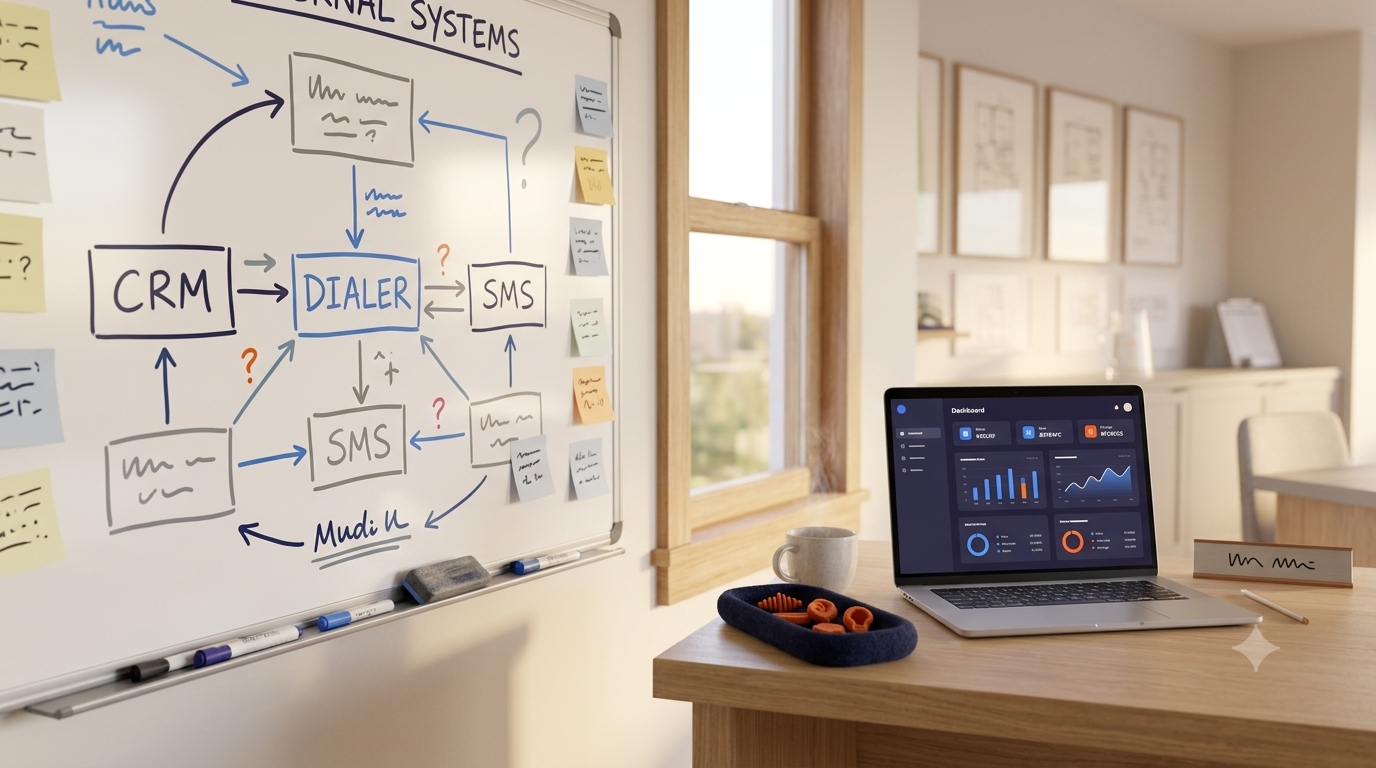
At some point in 2026, the question stopped being whether AI should handle the lead follow-up grind and became how you get it. Once a sales leader sees that an AI can call and text a buyer inquiry within seconds, qualify it, and book a tour, the next meeting is inevitably about ownership: do we build this ourselves, or do we buy something built for it?
It’s a fair question, and the honest answer isn’t “always buy.” It’s “buy, unless a specific set of conditions is true for you” — and most home builders should know exactly what those conditions are before they sink a quarter into a build. Here’s the framework.
First, get the framing right: this is an “extend the team” tool, not a moonshot
Whichever way you go, be clear about what you’re acquiring. You are not building artificial general intelligence. You’re building (or buying) a reliable system that does one job extremely well: instant, persistent, on-brand follow-up on every inquiry, so your OSCs spend their hours with buyers who are ready to talk. AI extends your team here — it doesn’t replace it. That framing matters for the build-vs-buy math, because it sets the real bar: not “can our engineers make an LLM talk,” but “can we make a follow-up system our OSCs trust with live buyers, at 2am, every day, without it ever going off-brand or off-script in a way that costs us a sale.”
That bar is higher than a prototype and lower than a research project. Where you land on build vs buy depends entirely on how much of that bar you can clear, and how fast.
The case for building it in-house
Building is the right call for a narrow set of builders. Be honest about whether you’re one of them.
You have a real ML/engineering team with spare capacity. Not a CRM admin and a motivated ops manager — engineers who can own a conversational system, its integrations, its monitoring, and its on-call. If that team exists and isn’t already fully committed to your core business, building becomes thinkable.
Your process is genuinely unique and is your moat. If the way you follow up with buyers is a true competitive differentiator that no vendor could replicate, owning the IP has strategic value. For most builders, follow-up is table stakes executed poorly, not a proprietary edge — but if it’s truly yours, that’s a point for building.
You have the patience for a 6-to-18-month time-to-value. A serious build means voice infrastructure, telephony, LLM orchestration, CRM integration, compliance (TCPA/consent), guardrails, and then months of tuning against real buyer conversations before you’d trust it on your best leads. If you can wait, building is an option. If you’re losing tours to slow follow-up this quarter, the timeline alone may decide it.
The general-purpose build-vs-buy frameworks for AI agents all converge on the same gate: build when the capability is core, differentiating, and you have the team to sustain it; buy when it’s mission-critical but not your unique value. For most home builders, lead follow-up is the second thing, not the first.
The case for buying — and what builders underestimate
Buying wins for most builders, and usually for reasons that only show up after a team has tried to build.
Time-to-value is measured in weeks, not quarters. A purpose-built system is live and booking tours while a build is still arguing about telephony providers. Every week of delay is tours that went to a faster competitor — the exact cost we break down in Speed to Lead for Home Builders.
The hard part isn’t the demo — it’s the long tail. Anyone can make an AI hold one good conversation. The work is the thousand edge cases: the buyer who replies at 1am in Spanish, the one who asks about a plan you discontinued, the angry “stop texting me” that must be honored instantly for compliance, the lead who says “call me after 6” and means it. A vendor who has handled millions of these conversations has already paid for that learning. An in-house build pays for it in live buyer relationships — which is an expensive classroom.
Maintenance never ends. Models change, carriers change their messaging rules, your communities and plans change weekly. A built system isn’t a project you finish; it’s a product you now own forever, with the staffing that implies. Teams routinely budget the build and forget the decade of maintenance behind it.
Domain-specific training is the real differentiator. A buy-side system built for home builders already speaks OSC, community, spec, TBB, and knows the shape of a new-home buyer journey. A generic in-house LLM has to be taught all of it. We make the case for why that home-builder-specific training matters in AI That Learns Your Community.
This is the same conclusion other verticals reached. Automotive dealers spent 2025 debating whether to staff up their BDCs or adopt purpose-built AI; the AI-agent-vs-BDC discussion landed where home builders are landing now — the build to match a specialized vendor rarely pencils out against buying one.
A decision framework you can run in one meeting
Score your situation honestly on these five questions. Mostly “build” answers mean a build is at least defensible; mostly “buy” answers mean stop deliberating.
- Do we have engineers who can own a conversational AI system long-term — not borrow them, own them? No → buy.
- Is follow-up a true competitive moat for us, or just something we want done well? Just want it done well → buy.
- Can we afford 6-18 months before it’s trustworthy on real leads? No → buy.
- Are we prepared to own compliance, monitoring, and maintenance forever? No → buy.
- Is a home-builder-specific vendor already doing 90% of what we’d build? Yes → buy (and spend your engineering on something only you can build).
Notice the asymmetry: a single “no” on questions 1-4 usually tips the whole decision toward buying, because each one is a hard dependency. Building requires all of them to be true. Buying requires none.
The hybrid most builders actually want
In practice, the smartest answer is rarely “build the whole stack.” It’s: buy the follow-up engine, and keep ownership of the things that are actually yours — your CRM, your buyer data, your brand voice, your sales process. A good vendor plugs into your stack and runs on your rules, so you get the speed and reliability of buying without surrendering control of your data or your customer relationships. You’re not outsourcing your sales team. You’re extending it with a layer that does the 2am grind your team can’t.
If you’re weighing this against simply hiring more people — a BDC, an after-hours call center, more OSCs — that’s a different comparison, and we run it in AI Voice Agent vs Inside Sales vs Call Center. And if you’re still sizing whether AI is even ready for new home sales, start with AI for Home Builder Sales in 2026. Whichever way you go, measure the result by outcomes rather than activity — see Home Builder Sales Metrics That Matter.
Where Jome fits
Jome is the buy-side answer purpose-built for home builders. The AI calls, texts, and emails your inquiries within seconds, qualifies them, books ready buyers into OSC calendars, and runs reactivation across your dormant database — all trained on home-builder language and integrated with your CRM, so your data and your buyer relationships stay yours. It’s the follow-up engine, not a replacement for your team. The build that would match it is the build most home builders shouldn’t take on.
FAQ
Isn’t building cheaper in the long run? Rarely, once you count fully-loaded engineering time, telephony and model costs, compliance work, and perpetual maintenance — and once you count the tours lost during the months you’re building instead of booking. The sticker price of a build is the smallest part of its real cost.
Can’t we just bolt an LLM onto our existing CRM ourselves? You can build a prototype that way in a weekend. The gap between that prototype and a system you’d trust with your best leads at 2am — handling compliance, edge cases, and brand safety reliably — is where the real cost lives. That gap is the whole job.
What if our process really is unique? Then a good vendor should run on your rules and your process rather than forcing you onto a generic script. Uniqueness in your process is an argument for a configurable bought system, not necessarily for building the entire engine from scratch.
How do we keep control of our data if we buy? Insist on it in the evaluation: your CRM stays the system of record, your buyer data stays yours, and the vendor operates as a layer on top. Buying the engine doesn’t have to mean handing over the relationship.
Spend your build budget where only you can build
The build-vs-buy question is really a question about where your team’s irreplaceable time should go. Almost no home builder’s competitive edge is “we wrote our own AI dialer.” Your edge is your communities, your homes, and the people who sell them. Buy the follow-up engine, keep your data and your process, and point your scarce talent at the things a vendor could never build for you.
If you want to pressure-test the build-vs-buy math against your actual lead volume and follow-up gaps, book a 20-minute walkthrough with Jome. We’ll show you exactly what the bought version does on day one — and what a build would have to match.
Skip the build-vs-buy debate — see Jome's ready-to-deploy follow-up engine at ai.jome.com.