2,845 Aged Leads → $1.8M in 43 Days: Case Study | Jome
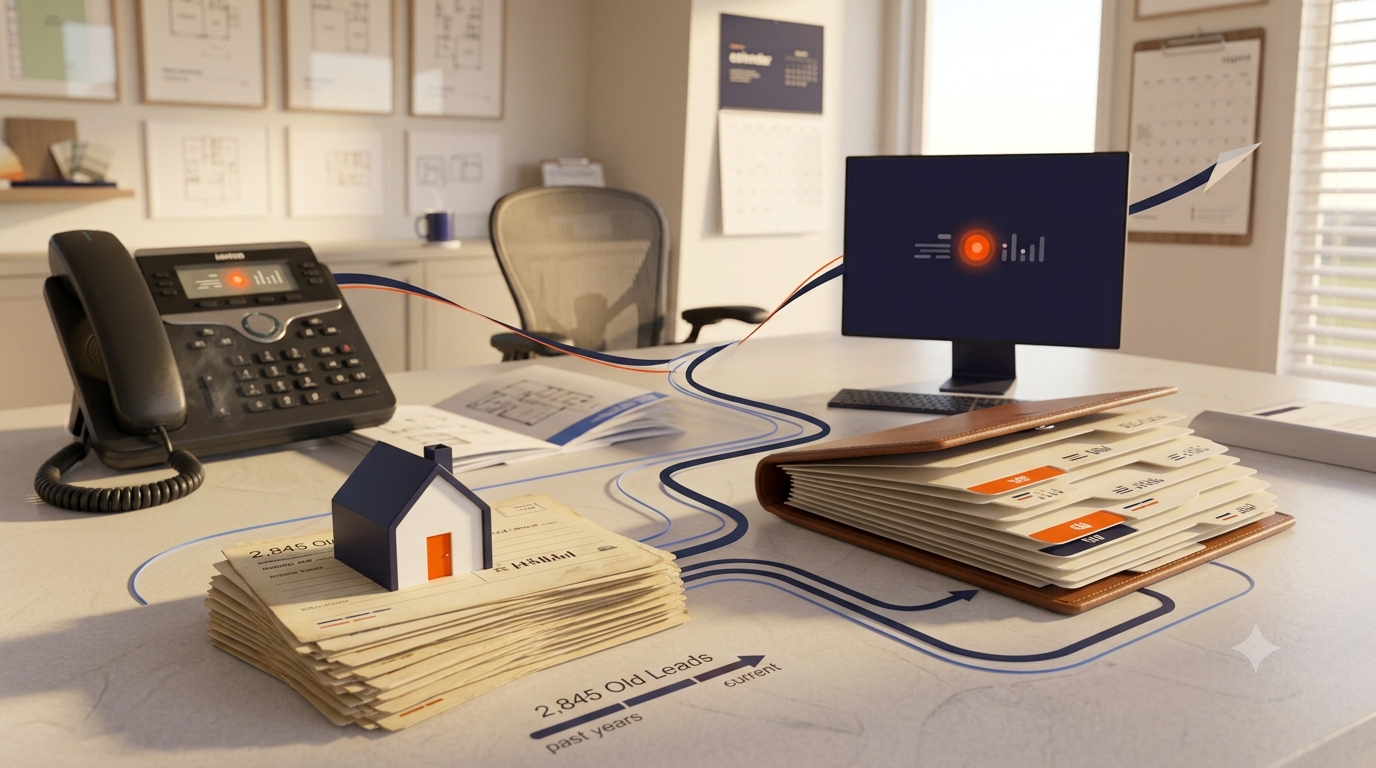
2,845 old leads. 43 days. $1.8M in contracts. Here's the pilot.
In 43 days, one Arizona division of a national home builder turned 2,845 aged leads into 31 tours and 4 signed contracts worth $1.8 million.
The leads were 4 to 18 months old. They were sitting in the CRM. Nobody had touched them in months. That's where most of them were going to stay — until we called.
Here's exactly what we did, what the numbers were at each step, and what the builder's team did differently this time that mattered more than any AI.
The setup
Three communities. One Arizona division. A division president and an OSC team that were already busy handling live inbound at roughly industry-average rates.
The aged leads — 2,845 of them — were not a secret. Every OSC on that team could have told you the bucket existed. They could also have told you why nobody had worked it: every week, the live inbound came first, and every week, the live inbound filled the hours.
We agreed on a segment: leads aged 4 to 18 months, across the three communities. Already-converted leads were excluded. So were leads who had formally opted out.
Setup took about 48 hours, mostly spent on CRM integration and dialing in the AI persona to match the builder's brand voice. By hour 48, we were making outbound calls.
What the outreach looked like
The AI called these leads on the hours buyers actually pick up: 9 to 10 AM local, 12 to 1 PM, and 5 to 6 PM. Dialing all day wastes calls — buyers don't pick up at 2:30 PM on a Wednesday. They pick up before work, over lunch, and on the drive home.
When a call connected, the AI qualified: current home-buying stage, price range, preferred communities, timeline, pre-approval status, and any questions. When the buyer had a question the AI couldn't answer — a specific lot availability, a pricing change — it tagged the conversation for the OSC to follow up, or offered a scheduled callback, or switched the buyer to text if that's what they preferred.
When a buyer said "I'd like to tour the model," the AI booked the tour directly into the onsite sales team's calendar. The buyer's context — what they'd said on the call, what they were looking for, their readiness level — was written back into the CRM before the onsite rep had their first sip of coffee that morning.
The cadence went three to five touches across voice, SMS, and email per lead. When a lead asked to stop, we stopped. Compliance was built in. The builder approved the messaging up front.
The funnel, number by number
Over 43 days, 2,845 leads moved through the pipeline like this:
| Stage | Count | Rate |
|---|---|---|
| Leads worked | 2,845 | — |
| Contacted | 2,333 | 82% contact rate |
| Responded (engaged) | 683 | 24% response rate |
| Appointments booked | 94 | 4.0% of contacts booked |
| Tours completed | 31 | 33% show rate |
| Contracts signed | 4 | 13% tour → contract |
Revenue from those 4 contracts: $1.8 million.
Two numbers are worth sitting with. The 82% contact rate on 4- to 18-month-old leads is far above what a single human OSC can achieve with the same bucket — not because the OSC isn't good, but because the OSC can't place 2,845 calls in 43 days on peak-hour windows. The 33% show rate on the tours is roughly industry-median for new construction, which tells you the appointments were real appointments, not soft "I'll think about it" bookings.
What the builder's team did differently
This is the part nobody puts in the pilot write-up, and it's the most important part.
The OSCs didn't run the aged-lead outreach. They ran the tours that came out of it.
Because the aged-lead work was handled, the OSCs had their hours back. They prepped harder for the onsite tours. They coached the onsite reps on what these specific buyers had said on the qualification call. They had the CRM context ready when the buyer walked in.
Appointment-to-contract rates held strong on this pilot — 13%, which is healthy for new construction — because the human side of the funnel got more attention, not less.
That is the single most-misunderstood thing about running AI alongside an existing sales team. AI isn't taking over the part of the job that matters. It's taking over the part that was never getting done.
The economics nobody asks about until pilot 2
At $1.8M in revenue from a one-division, 43-day pilot on leads that would otherwise have stayed dormant, the ROI question answers itself. What matters more is what it does to the full operation.
- The OSCs kept their same week structure but added pre-qualified tour briefings to their workflow.
- The onsite reps saw 31 new tours they didn't have to generate.
- The CRM became cleaner, not dirtier — the AI wrote structured notes back for every conversation, tagged intent, and flagged the leads worth re-touching in 30 days.
- The division's demand visibility improved: leadership could finally see how much real intent was sitting in the aged-lead bucket, because someone had finally asked each buyer where they were in their journey.
What this doesn't say
The pilot ran on aged leads. The top of the live-inbound funnel is a different problem. If live-inbound response times are already slow — say, averaging more than 20 minutes — fixing that is probably the first move, not aged-lead reactivation.
The pilot also ran in Arizona, with Arizona-specific market dynamics. The same 2,845-lead bucket in a different market, with different seasonality and different buyer urgency, will produce different numbers. We've seen contract rates range from 3 to 6 per 3,000 aged leads across different divisions and regions.
Finally — and this is the line we say on every sales call — the AI doesn't close homes. The onsite team does. The pilot worked because the builder had good communities, a real product, and a team that could execute once the tour was on the calendar.
FAQs
How long does setup take? For most builders with Lasso, Salesforce, Pipedrive, or a CSV export: 48 hours. The integration is our team's lift.
What kind of leads work best? Leads aged 3 to 24 months. Older than that, contact rates start to fall. Younger than 3 months, and the live-inbound team is usually still in active pursuit.
What if my OSCs are already reaching out to aged leads? Great — that means you have a channel to test. Most OSCs who are reaching out to aged leads are reaching out to 5 to 10% of them. AI reaches out to the other 90%.
Is this TCPA-compliant? Yes. Compliance rules are applied per jurisdiction, honoring opt-outs, quiet hours, and consent records. The builder approves the full messaging script before launch.
What about the leads who don't want to be called? They ask to stop, we stop. That preference gets written back to the CRM so nobody — AI or human — reaches out again.
Want to see if your aged-lead bucket has the same pattern? We'll scope a pilot on a segment of your 3-24 month old leads. You keep closing. We handle the grind. Visit ai.jome.com.
Next Read
Your OSC Isn't the Bottleneck. Your CRM Is — why this backlog exists in the first place.
How Many Leads Can One OSC Really Handle? — the capacity math behind it.