After-Hours Leads in New Home Sales | Jome
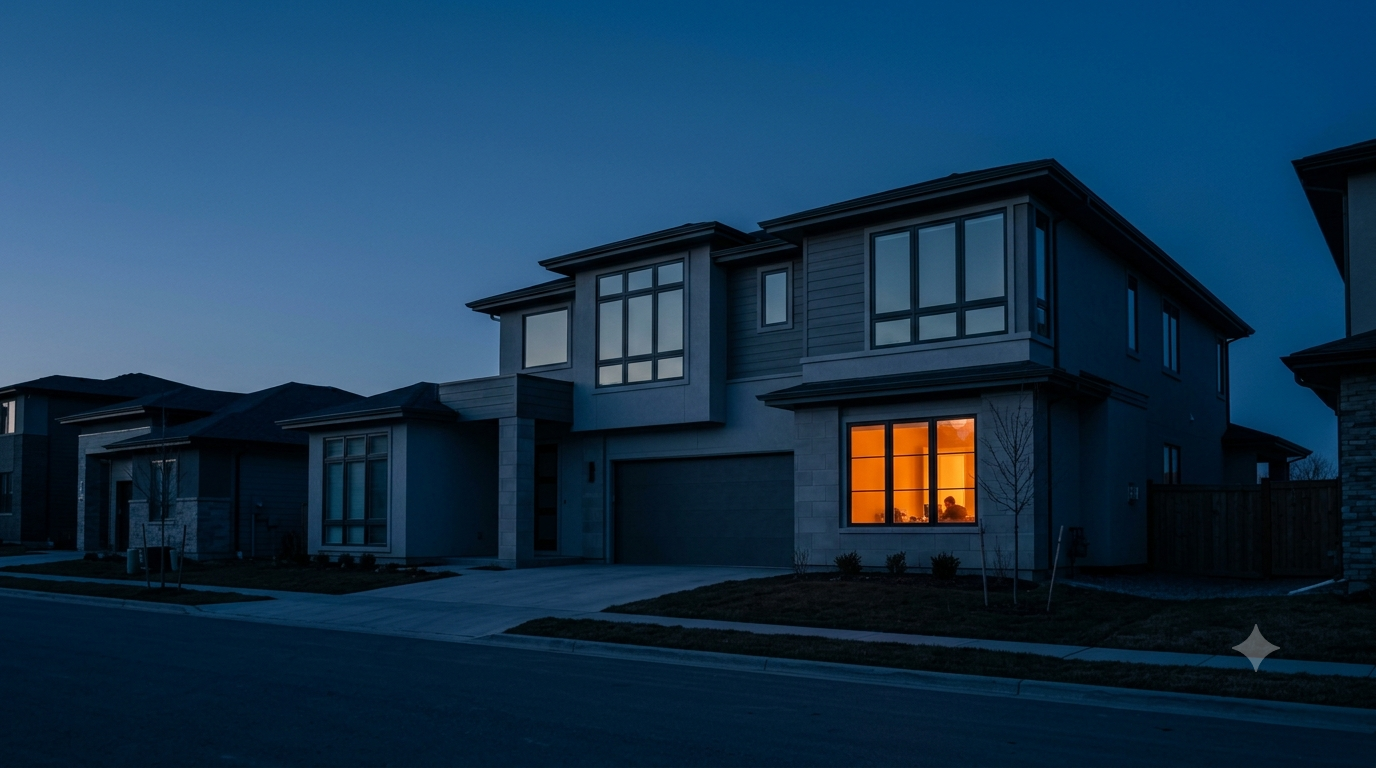
It's 7:42 PM on a Tuesday in Phoenix. A buyer in Avondale who just got home from a 12-hour shift opens her laptop, types "new construction Buckeye Arizona," lands on your community site, and fills out the form for the spec home with the upgraded master suite.
Your OSC went home at 5:30. The next time anyone touches that lead is 8:14 AM Wednesday — twelve hours and thirty-two minutes after submission. By 9 AM she's already booked a tour at the builder one community over because they sent her a text at 7:43 PM.
This isn't a performance problem. It's a capacity problem. Your OSC is exceptional during her shift. She just isn't sitting at her desk at 7:42 PM, and she shouldn't be.
This post is the after-hours playbook for new home sales. The shifts that matter, the response windows that move conversion, what to staff for, what to automate, and how the math actually pencils out for a typical division.
TL;DR — the after-hours playbook in seven lines
- Roughly 40-60% of new construction inquiries hit between 5 PM and 11 PM local time on weekdays — outside standard OSC shifts.
- Speed-to-lead under five minutes roughly doubles conversion vs. the 24-hour mark; after 30 minutes the curve flattens hard.
- Saturdays and Sundays carry the highest single-day volume in most builder divisions — and most internal sales teams cover those days lightly.
- The three peak windows you actually need to cover are 9-10 AM, 12-1 PM, and 5-9 PM. Nights and weekends compound on top.
- Don't ask your OSC to be on call. Burnout will cost you more than the leads.
- Hybrid coverage works: human OSCs on live shifts, AI follow-up running the gaps. Each lead gets a fair shot.
- The win condition isn't "answer every lead instantly." It's "no lead goes 24 hours without contact."
Why after-hours coverage is suddenly the bottleneck
Five years ago, the working assumption in most builder sales orgs was that buyers shopped during business hours. That assumption has aged badly.
A 2024 Zillow buyer survey put it bluntly: most new-home buyers do their heaviest browsing between 6 PM and midnight, and a meaningful share submit at least one inquiry after 8 PM. Cell-phone form submissions skew even later — buyers fill out forms in bed, in parking lots, in the school pickup line.
Two things have changed at once. First, the buyer's day has stretched — work from home means the "I'll look at houses on my lunch break" window is now a fluid evening behavior. Second, builders have layered more lead-capture surfaces — chat, "request more info" forms on Zillow and NewHomeSource, pop-up forms on community pages, IDX-aware MLS feeds. More surfaces, more after-hours form fills.
The result: the average builder lead distribution has shifted later, and most online sales teams haven't adjusted.
The five shifts that decide your month
Every builder division runs through the same recurring shifts. These are the ones you have to cover, ranked by impact.
Shift 1 — the morning rip (8-10 AM weekdays)
This is the catch-up window. Leads that came in overnight need first contact before they shop competitors over coffee. If your OSC's first 90 minutes are spent on yesterday's inbox, you've lost the morning.
Goal: every overnight lead contacted in the first 30 minutes of the shift, ideally before 9:00 AM.
Shift 2 — the lunch surge (11:30 AM-1:30 PM weekdays)
White-collar lead volume spikes here. People look at homes on their lunch break. The challenge: this is also when your OSC is trying to eat.
Goal: continuous coverage. If one OSC is offline for lunch, the second has to be on.
Shift 3 — the post-work avalanche (5-9 PM weekdays)
The biggest single window. Volume here is often 2-3x the lunch shift. If your OSC's day ends at 5:30 PM, you are missing the largest after-hours bucket on the calendar.
Goal: five-minute first response, every weekday, every week.
Shift 4 — the weekend
Saturdays and Sundays are the highest single-day volume in most divisions, both for browsing and for tour requests. A reduced weekend rotation (one OSC, half-shift) is common and almost always under-staffed.
Goal: at minimum, same response speed as weekdays. Bigger builders run a full Saturday rotation.
Shift 5 — the deep night (10 PM-6 AM)
Lower volume, but real. Insomniac buyers, shift workers, traveling buyers in different time zones. The right play here isn't a human shift — it's automated text + email confirmation, with a human callback queued for the morning.
Goal: acknowledge inside 5 minutes, schedule the human callback inside 12 hours.
What "good" looks like — concrete coverage rules
After working through dozens of builder org charts, the coverage rules that actually work look like this. They're not novel. They're just rarely written down.
Rule 1 — every lead gets a first touch in 5 minutes during business hours, 30 minutes after hours.The five-minute SLA is well-documented in builder-marketing research. The after-hours acknowledgement is more lenient because nobody expects a human at 11 PM, but they do expect something — a confirmation text, a calendar link, a "we got this and Jenna will call you at 8:30 AM."
Rule 2 — every lead gets a human voice contact attempt within 24 hours.Not 48. Not "next business day." Twenty-four hours. The lead-aging curve says days 0-1 convert dramatically better than days 2-7.
Rule 3 — no human OSC works after 7 PM unless they want to.The temptation to push OSCs into evening shifts to chase the post-work surge is real and it backfires inside six months. OSCs burn out, churn, and the cost of replacing them is higher than the leads you'd have rescued.
Rule 4 — weekends rotate, weekends cost extra.Saturday OSC shifts pay overtime or use a separate weekend rotation. Don't pretend Saturday is "just another shift."
Rule 5 — automate the acknowledgement, never the qualification call.After-hours automation is fine for "got your inquiry, here's what to expect." It's not fine for "great, can we talk through your budget and timeline?" Qualification needs a human voice or a system that can actually have the conversation.
What this looks like in practice — the hybrid model
Most divisions can't afford a 24/7 human OSC team and shouldn't try to build one. The hybrid coverage model that's working in 2026 looks roughly like this.
Live OSC shifts: Monday-Friday 8 AM-7 PM, Saturday 9 AM-5 PM, Sunday 10 AM-3 PM. One OSC primary, one secondary on busy windows. This covers the bulk of human-to-human follow-up where the conversation deserves it.
Automated acknowledgement layer: every inquiry, every channel, every hour. Confirmation text within 60 seconds, branded email within 5 minutes, calendar link to book a follow-up call.
AI follow-up layer for aged inquiries and overflow: This is where the math really shifts. Every builder we work with at Jome finds the same pattern — a CRM full of inquiries from 30, 60, 180 days ago that nobody has called in months. Adoption is where most AI projects die. The ones that stick share a property: they don't change how the existing team works. A system like Jome runs in the background calling 18-month-old inquiries on peak-hour windows, sending text follow-ups overnight, and writing structured notes back to Lasso, BuilderTrend, or Pipedrive — same workflow, more throughput. In an Arizona pilot, that pattern moved 2,845 aged leads through to 31 tours and 4 contracts in 43 days, $1.8M revenue. The OSCs ran their normal shift; the AI handled the leads they'd never have touched.
Human callback queue: the AI books the call, the OSC takes it. The handoff is the entire point — every conversation that needs a person gets a person, on a schedule the OSC actually works.
This is the practical version of "your team closes, the AI handles the grind."
Common mistakes (and the fix)
Mistake 1 — making OSCs answer leads from their phones at home.Short-term win, long-term staffing crisis. The OSCs who agree to it are the ones you can't afford to lose.
Mistake 2 — relying on the lead form to "qualify" before contact.A short web form will never tell you what a 90-second voice call will. Contact first. Qualify second.
Mistake 3 — running automated SMS that sounds like a robot.After-hours acknowledgement should sound like the OSC wrote it. If your text says "Thank you for your inquiry. A representative will be in touch," your buyer will assume the rest of the experience matches.
Mistake 4 — not measuring time-to-first-contact by shift.Aggregate "average response time" hides the after-hours problem. Break the metric out by 8-12, 12-5, 5-9, weekend, overnight. The gap is where the money is.
Mistake 5 — treating "after-hours" as a separate program instead of part of the standard playbook.After-hours coverage isn't a project. It's a permanent line item in your sales ops budget.
What this means for your team
The argument for after-hours coverage isn't "be available 24/7 because the modern buyer expects it." That's lifestyle marketing.
The argument is colder: in the average division, 40-60% of inquiries arrive in shifts your team isn't on. If those leads get the same treatment as the 8 AM lead — fast, personal, structured — your contract count goes up without any change to your OSC roster, your CRM, or your media spend. If they don't, you're paying for inbound that dies on the vine.
Build the coverage map first. Then decide what's human and what's automated. Then run the math.
FAQ
How fast does first contact need to be after hours?Inside 30 minutes for an automated acknowledgement (text + email), inside 24 hours for a human voice attempt. Faster on either end is better; slower on either end measurably hurts conversion.
Should we hire OSCs to work nights?Generally no. Night-shift OSC roles burn out fast, are hard to fill, and the volume usually doesn't justify a dedicated FTE. A hybrid model — human shifts during the day, automated acknowledgement and AI follow-up overnight — pencils better in almost every case.
What's the difference between "after-hours" and "speed-to-lead"?Speed-to-lead is a metric (how fast you respond to any inquiry). After-hours is a coverage gap (the shifts your OSCs aren't working). The five-minute SLA is hard to hit during business hours. After hours, it's impossible without automation.
How do we measure if our after-hours coverage is working?Three numbers, tracked weekly. (1) Time-to-first-contact, broken out by shift window. (2) Contact rate by shift — what percent of after-hours inquiries reach a real conversation inside 48 hours. (3) Conversion rate by lead source AND time of submission — after-hours leads should convert at roughly the same rate as business-hours leads. If they don't, your coverage is leaking.
Is it TCPA-compliant to send automated SMS after hours?Yes, with consent and timing rules. SMS to a buyer who submitted a form with checkbox consent is allowed; the FCC's TCPA quiet-hour guidance generally restricts marketing texts between 9 PM and 8 AM in the recipient's local time, but transactional confirmations of an inquiry the buyer just submitted typically fall outside that. Run your specific cadence by counsel.
Next reads
- Your OSC Isn't the Bottleneck. Your CRM Is — why the after-hours gap is a capacity problem, not a performance one
- How Many Leads Can One OSC Really Handle? — the capacity math behind the staffing decision
What to do Monday morning
Pull the last 90 days of inquiries from your CRM. Tag each one with the local time it came in. Bucket by shift — morning, lunch, post-work, weekend, overnight. Then pull time-to-first-contact for each bucket and compare conversion rates.
The gap will tell you which shift to fix first. Most divisions discover the after-hours gap was always the biggest one — they just hadn't measured it before.
Or don't let 6 PM cost you the tour — Jome answers every after-hours lead in seconds, all night and weekend, in your builder's voice. — see it live at ai.jome.com.